
The Weekend Mustang: What Owning a 1960s Fastback Actually Asks of You
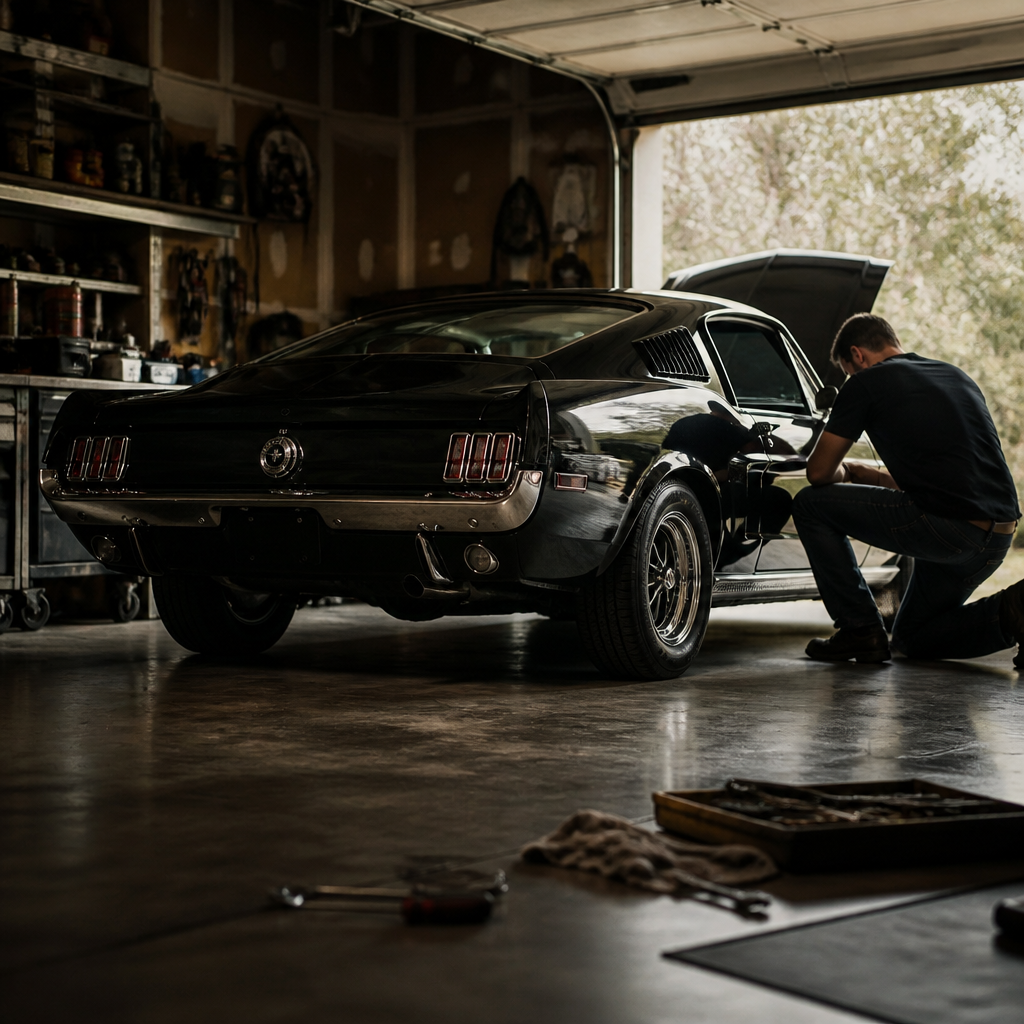
A first-generation Mustang photographs beautifully from any angle, which is exactly why so many people buy one before they understand what they are signing up for. The car is simple, charismatic and mechanically honest — and it is also sixty years old, built to standards that predate crumple zones, fuel injection and the idea that a car should start reliably at 20 degrees. None of that makes a vintage Mustang a bad purchase. It just means the smart buyer goes in with a plan instead of a mood.
This is a practical look at what the 1964½–1970 cars are really like to own, how to inspect one without a lift, and where the money tends to go once the car is in your garage.
Why these cars still dominate the conversation
Ford sold Mustangs in enormous volume, and that volume is still the single biggest practical advantage the car has over nearly every other sixties collectible. Parts availability is extraordinary: floor pans, quarter panels, full wiring harnesses, interior kits, suspension components and brake upgrades are all off-the-shelf items. A rare European coupe of the same vintage might require a machinist, a patternmaker and eight months of patience for a part that a Mustang owner can order on a Tuesday.
The second advantage is mechanical transparency. A 289 or 302 small-block is a straightforward pushrod V8 with a carburetor on top. You can set the timing with a light and a wrench, diagnose a miss by ear, and rebuild the whole thing on a bench in a two-car garage. For anyone who wants to learn cars rather than just own one, there is no better teaching platform.
The body styles, briefly
- Coupe (hardtop): the most plentiful and the easiest entry point. Strongest structure of the three, lowest cost of entry.
- Fastback: the shape everyone pictures. Commands a clear premium, and rear visibility is genuinely poor.
- Convertible: the best driving experience in good weather, the most rust-prone, and the one where a worn top and sagging body braces hide real money.
Inspecting a car before you fall in love with it
Rust is the only thing that truly matters at the inspection stage. Engines can be rebuilt for a predictable number; corroded structure cannot be budgeted with the same confidence, because every panel you cut out reveals the next one. Bring a flashlight, a small magnet, a mirror and clothes you do not care about.
- Torque boxes and frame rails. Get under the car and look where the rails meet the floor behind the front wheels. Flaking, layered rust here is structural, not cosmetic.
- Floor pans and the area under the rear seat. Pull the carpet if the seller allows it. Fresh undercoating sprayed over a floor is a warning, not a feature.
- Cowl area. Run water down the windshield base with the doors open and watch the kick panels. A leaking cowl is a known weak point and an unpleasant repair.
- Shock towers. Cracks radiating from the upper mounts are common on hard-driven cars and are a real job to fix properly.
- Quarter panels and wheel arches. Use the magnet. Thick filler shows up fast.
- Door gaps and glass fit. Inconsistent gaps often mean a sagging body or past collision work that was never squared up.
On the mechanical side, listen for a bottom-end knock on a cold start, check the transmission for crunch going into second, and watch the oil pressure gauge once the engine is hot. Original drum brakes all around will feel alarming the first time you need them; most owners eventually fit a front disc conversion, which is one of the few modifications almost nobody regrets.
Driving one more than twice a month
There is a real difference between a show car and a car you actually use. Vintage Mustangs can handle regular duty, but the compromises are specific: no air conditioning in most cases, vague steering, a cabin that gets loud above highway speed, and a cooling system that needs to be in perfect order for stop-and-go traffic. If you are weighing whether a sixties car can carry real mileage, the honest trade-offs involved in daily driving a classic Mustang are worth reading before you commit to it as your only vehicle.
Owners who cover serious distance tend to make the same handful of changes: electronic ignition to end the points-and-condenser ritual, a four-core or aluminum radiator with a proper shroud, radial tires on wider wheels, front discs, three-point belts, and an upgraded alternator if any modern electronics go in. None of that ruins the character of the car. All of it reduces the number of Sundays you spend under the hood instead of behind the wheel.
Restoration, restomod, or reproduction?
There are three honest paths, and choosing the wrong one is how budgets get destroyed. A concours-correct restoration means date-coded parts, original finishes and a car you will be reluctant to drive in the rain. A restomod keeps the sheet metal and adds modern running gear — a stronger engine, overdrive gearbox, rack-and-pinion steering, real brakes. And then there is the reproduction route: a new-build car in a classic shape, assembled with modern tolerances, modern safety equipment and a warranty.
That third category has grown considerably, and it is worth understanding before you dismiss it. Specialists building new interpretations of the 1960s cars publish detailed breakdowns of how a modern reproduction differs from its ancestor — chassis stiffness, electrical architecture, drivetrain choice, climate control, how the body panels are fitted — and reading that kind of comparison sharpens your eye even if you ultimately buy an original. If you are browsing classic mustangs for sale with no firm decision yet, comparing an original survivor against a purpose-built modern equivalent tells you quickly which parts of the experience you actually care about: the authenticity and the patina, or the shape and the sound without the compromises.
The ownership math nobody mentions at the car show
Budget for the car and then budget again. A running, driving Mustang almost always needs a sorting phase: fluids, hoses, belts, brake lines, a carburetor rebuild, a set of tires with a usable date code, maybe a fuel tank and sender. Treat that as part of the purchase price rather than a surprise, and your first year will be far more enjoyable.
Beyond that, three things matter more than most buyers expect. Storage: dry, ventilated and ideally not shared with a lawnmower. Insurance: an agreed-value classic policy with mileage terms you can live with. And documentation: keep every receipt, photograph every repair, and hold onto the Marti report or build data if the car has it. A thick folder adds real credibility when you sell, and it stops you repeating work the previous owner already did.
Showing up to the car with the right details
Classic car culture rewards people who pay attention to the small stuff, and that attention tends to spill over. The same owners who agonize over the correct shade of blue for a 1967 instrument bezel usually turn up at a Saturday meet looking deliberate rather than accidental — clean denim, decent boots, and a haircut that holds its shape in an open convertible. If you want something that suits a strong jawline and a weekend of wind, a sharp taper is the obvious move, and a quick pass through a fade haircut finder will get you to the specific variation that matches your head shape and hair type instead of guessing in the barber’s chair.
Buy the car you will actually use
The best vintage Mustang is the one that fits your tolerance for maintenance and your appetite for driving. If you want to tinker, buy a solid coupe with honest flaws and learn it inch by inch. If you want the look and the noise without the weekends on your back, a well-sorted restomod or a modern reproduction is a legitimate answer, not a cop-out. What matters is being honest about which owner you are before you hand over the money — because the car will find out either way, usually on a Sunday afternoon forty miles from home.

Alex Fade
Alex Fade is a men’s grooming enthusiast and haircut style writer at Fade Haircut.Blog He specializes in modern fade haircut styles including low fade, mid fade, high fade, and skin fade. Through detailed guides and hairstyle inspiration, Alex helps readers discover the perfect haircut that suits their face shape, personality, and lifestyle. His goal is to share the latest barber trends, styling tips, and grooming advice to help men look sharp and confident every day.